

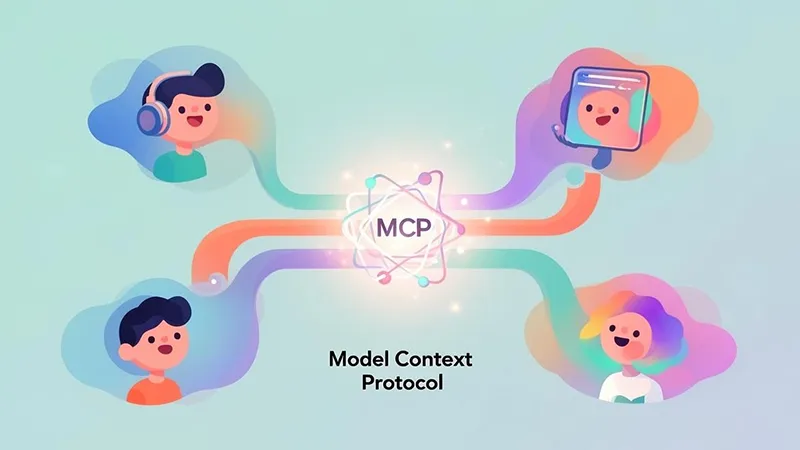
Plaud is now taking a major step toward an even smarter AI workplace. With support for the Model Context Protocol (MCP), users can now connect their Plaud account directly to AI services such as ChatGPT and Claude, making it possible to search, analyze, and create content from meetings without first exporting transcripts or summaries.
At the same time, Plaud is launching a new automatic speaker recognition feature that learns to identify recurring voices over time. Together, these updates create a much smoother workflow, where meeting notes and AI become a natural part of the same ecosystem.
Skip exporting your meetings
Until now, many AI workflows have required several manual steps. After a meeting, transcripts had to be exported from the recording app and then uploaded to ChatGPT or another service before the material could be analyzed or used to write reports, summaries, or follow-ups.
With MCP, that process goes away. Compatible AI services can connect directly to your Plaud account and work with your transcripts and AI summaries. The result is a faster workflow, where you can ask questions about past meetings, find specific decisions, or let AI create new documents based on your entire meeting history.
Works with several major AI services
At launch, several of the market’s most popular AI tools are supported. These include ChatGPT, Claude Desktop, Claude Code, Cursor, Codex, Windsurf, Gemini CLI, and Zed. Plaud also says that more integrations will be added over time.
For users, this means meeting data is no longer locked to a single app. Instead, the information can be used in the AI tools you already work in, whether the goal is to write reports, analyze projects, or create code and documentation.
Smarter speaker recognition over time
In addition to MCP, Plaud is also introducing automatic speaker recognition. The feature gradually learns to identify the user and recurring people in recordings, so names can appear automatically without having to be tagged again each time.
The feature works for in-person meetings, online meetings, and phone calls. Recording phone calls requires either the Plaud Note or Plaud Note Pro. The more the system is used, the more accurate it becomes at identifying different voices.
A step toward a more connected AI everyday life
MCP is quickly becoming a common standard for how AI models communicate with external services and data sources. By adopting the standard, Plaud makes it easier for AI to work directly with the information already stored, instead of requiring users to move files between different services.
For anyone using Plaud as their digital meeting memory, this means recordings become much more useful. Meetings can not only be transcribed and summarized, but also serve as a living knowledge base that AI can search, analyze, and build on when new documents are created or decisions are made.




 Svenska (SEK)
 Dansk (DKK)
 Norsk (NOK)
 Suomi (EUR)
 Eesti (EUR)
 Latviešu (EUR)
 Lietuvių (EUR)
 Deutsch (EUR)
 Français (EUR)
 Español (EUR)