


 Svenska
 Dansk
Dansk
 Norsk
Norsk
 Suomi
Suomi
 Eesti
Eesti
 Latviešu
 Lietuvių
 Deutsch
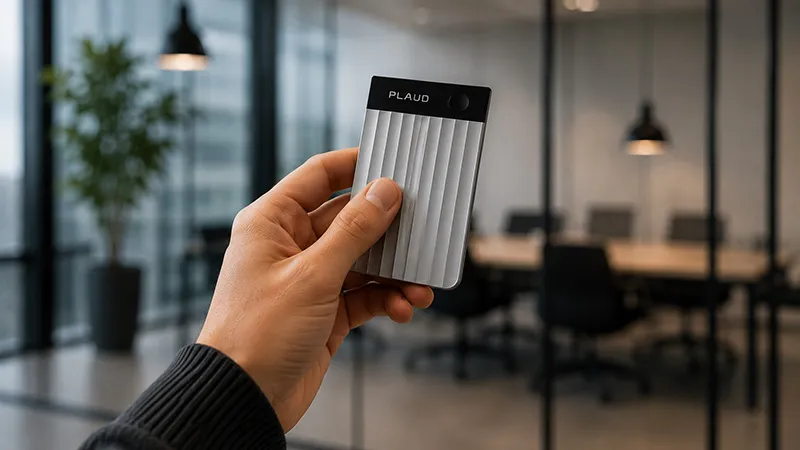
AI voice recorders have quickly become a common tool for everything from sales meetings and interviews to lectures and everyday notes. But the same question comes up almost immediately: is it actually legal to record conversations in Sweden?
The short answer is yes - in many cases. But there are also several important limits to be aware of, especially when recordings are used at work or contain personal data. Here, we go through what Swedish law says about recording conversations, what GDPR means in practice, and what you should think about before you press rec.
Can you legally record conversations in Sweden?
In Sweden, what is often called “one-party consent” applies. In practice, that means if you are part of the conversation, you may also record it without having to ask the other participants for permission.
This applies, for example, to:
- phone calls you are part of
- digital meetings
- in-person meetings at work
- interviews
- sales calls
- private conversations
This is something many people miss. In other words, it is not automatically illegal to record a meeting just because the other people do not know about it - as long as you are part of the conversation yourself.
However, you may not record a conversation between other people if you are not taking part in it yourself. In that case, it may instead count as unlawful eavesdropping, which is a crime under Swedish law.
What counts as unlawful eavesdropping?
The line is fairly clear here.
For example, if you:
- hide a recording device in a room
- record colleagues without being present yourself
- eavesdrop on phone calls between other people
...it may count as unlawful eavesdropping.
It therefore makes a big difference whether you are an active part of the conversation or not.
Many people searching for “record conversations secretly” mix up these rules. Swedish law focuses primarily on participation, not on whether the recording is secret or open.
Can you record meetings at work?
Here, things become a little more nuanced.
From a legal standpoint, you can normally record a meeting you are part of. That may include, for example:
- performance reviews
- meetings with your manager
- sales meetings
- customer meetings
- digital video meetings
But even if the recording itself may be legal, that does not automatically mean it is always appropriate or risk-free from a workplace perspective.
Many employers have their own policies on recording, confidentiality, and information handling. In some professions, confidentiality obligations or sensitive personal data can also make the situation more complicated.
It is therefore wise to consider both the law and the relationships around you. In many cases, being open is the easiest way forward, especially for longer meetings or recurring recordings.
How does GDPR work when recording conversations?
This becomes especially important for companies and professional use.
The recording itself may be legal under Swedish law, but if it contains personal data, it is often also covered by GDPR.
This applies especially if the recording is:
- stored for a long time
- shared further
- transcribed
- used in business operations
- uploaded to cloud services
GDPR is therefore not primarily about whether you are allowed to record - but about how the information is handled afterwards.
For companies, it is therefore important to:
- have clear routines
- use secure services
- know where the data is stored
- limit access
- be able to delete material when needed
Many modern AI recorders and transcription services now offer features such as encryption, password protection, and secure cloud storage to make this easier.
Recording phone calls in Sweden - what applies?
The rules are basically the same for phone calls. If you are part of the conversation, you may normally record it.
This can be useful, for example, for:
- customer meetings
- journalistic interviews
- follow-ups
- sales calls
- important information meetings
At the same time, it is often a good idea to inform the other person anyway, especially in professional settings. It creates clarity and reduces the risk of misunderstandings later on.
Checklist before you record a meeting
Before you start a recording, it can be helpful to quickly go through a few simple questions:
Am I taking part in the conversation myself? Does the meeting contain sensitive information? Are there internal rules or policies? Will the recording be stored or shared further? Do the participants need to be informed? Is the material handled securely?
Just a few seconds of reflection can make a big difference.
Summary
Recording conversations legally in Sweden is fully permitted in many cases, especially if you are part of the meeting or phone call yourself. But it is important to distinguish between the recording itself and how the material is then used, stored, and shared further.
For companies and professionals, GDPR, data security, and clear routines are at least as important as the recording itself.
For those who want to document meetings, interviews, or ideas in a smooth way, AI-based recording tools can be a powerful aid - especially when combined with secure storage, transcription, and clear control over your material.
Read more about our AI recorders and how PLAUD Intelligence works with security, encryption, and smart transcription at plaud.se.